Best Golf Sunglasses: Tint, Polarisation and Fit
Golf sunglasses are sold on lens technology and bought on looks, and the one specification that genuinely changes what you see on a green is the one nobody argues about properly.
Some links here earn us a commission at no extra cost to you. It never changes what we recommend or the order we rank it. How this works.
Most golfers try sunglasses once, find the ball hard to pick up against the sky, and never wear them again. That is usually a tint problem rather than a sunglasses problem, and occasionally it is a polarisation problem, which is the one worth arguing about because the popular advice and the useful advice point in opposite directions.
The four, compared
Three specifications decide whether a pair works on a golf course: what the tint does to grass, whether the lens is polarised, and whether the frame stays put through a turn with a cap on. Everything else is styling.
| Pick | Best for | Lens | Polarised | Interchangeable | Fit | Price |
|---|---|---|---|---|---|---|
| Oakley Flak 2.0 XL | The tint that was actually designed for a golf course | Prizm Golf tint in Plutonite | The Prizm Golf tint is not sold as polarised | Replacement lenses sold separately | Standard frame with extended lens coverage, half rim | £144.50 at UK retail, against a £168 RRP |
| SunGod Vulcans | Staying on your face through a full turn | 8KO nylon, in tints SunGod list under golf | Polarised options offered across the golf range | Yes, lenses swap in the frame | Convertible, run as a full frame or as a top frame shield | £140 for the standard build, more for some lens and frame combinations |
| Tifosi Rivet | A golf tint for a quarter of the money | Enliven Golf, with Fototec and Clarion Mirror options | Not published on the Enliven Golf lens | Yes on the Interchange version | Vented lens, adjustable nose and ear pieces | £79.99 at Tifosi's UK store |
| goodr Sonic G | Cheapest thing that does not slide down your nose | Tinted with a mirror or gradient finish depending on colour | goodr publish polarised lenses across the range | No | Wrap shield with a grip coating on the arms and bridge | £40 at goodr's UK store |
Prices in eyewear move less than in most golf categories, because these are optical products rather than seasonal ones. What does change is the frame colour, and a discontinued colourway is usually the same glasses at a discount.
Oakley Flak 2.0 XL: the tint built for grass
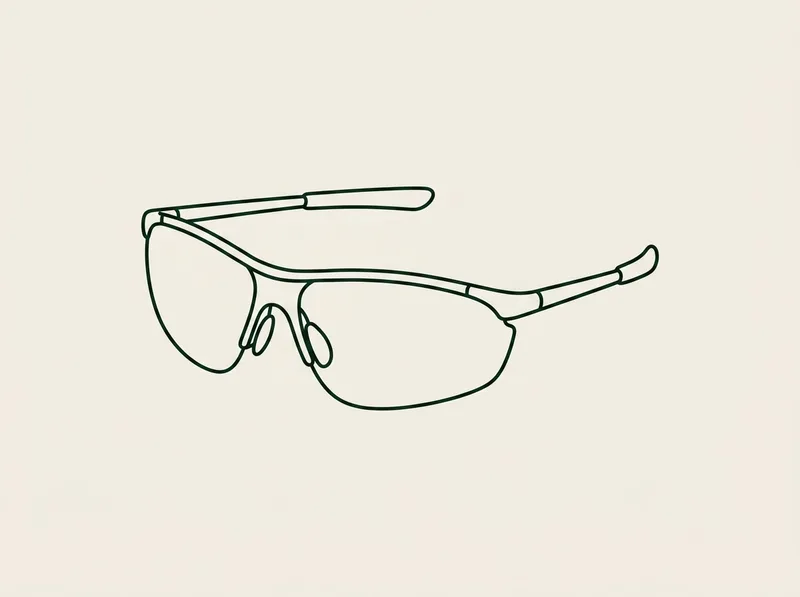
The Oakley Flak 2.0 XL exists on this page for one reason, which is Prizm Golf. Oakley's approach with Prizm is to filter specific wavelengths rather than dimming everything equally, and the Golf version is tuned to push apart the greens that a golf course is made of. Fairway, fringe, first cut and rough are all the same colour to a normal grey lens. They are not the same colour through this one.
The frame is O Matter with Unobtainium earsocks and nosepads, which grip harder as they get damp rather than more slowly, and the lens is Plutonite with an 8.75 base curve. The half rim matters more than it looks: with no frame along the bottom edge, there is nothing sitting in your sightline when you look down at the ball.
 £144.50 at UK retail, against a £168 RRP
Oakley Flak 2.0 XL
- Lens
- Prizm Golf tint in Plutonite
- Polarised
- The Prizm Golf tint is not sold as polarised
- Interchangeable
- Replacement lenses sold separately
- Fit
- Standard frame with extended lens coverage, half rim
- Frame
- O Matter with Unobtainium earsocks and nosepads
- Optics
- 8.75 base lens geometry with High Definition Optics
- The Prizm Golf tint is built around one job, which is separating fairway, fringe and rough by contrast rather than by brightness.
- The half rim leaves the bottom of the lens open, so nothing sits in your eyeline at address.
- Unobtainium pads grip harder as they get damp, which is the opposite of what most nose pads do.
- The dearest pair here, and the money buys one fixed tint with no warranty behind it, where the SunGod is five pounds less and guaranteed for life.
- Changing lenses means buying a second set rather than a second lens in the same box.
- The XL lens is deep, and on a small face it fouls the cheekbone when you look down at the ball.
VerdictThe default answer for a golfer who plays mostly in bright conditions and wants the tint that was engineered for the surface. Look elsewhere if you play in mixed light often enough that one fixed tint is the wrong tool.
Two honest weaknesses. It is the most expensive way here to buy a single fixed tint, and changing tint means buying a second lens set rather than swapping something that came in the box. And the XL lens is deep, so on a smaller face it can catch the cheekbone at address, which is exactly the position where you least want to notice your sunglasses.
SunGod Vulcans: the pair that stays on
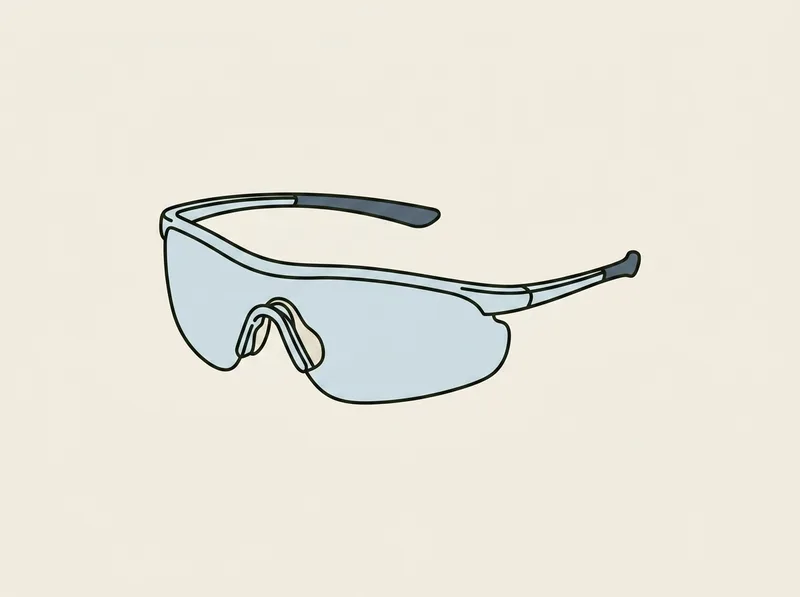
The SunGod Vulcans come at this from endurance sport rather than from golf, and it shows in the specification most golf brands ignore. They weigh 34 grams, SunGod publish that figure, and the frame converts between a full rim and a top-only shield so the fit and the sightline are both something you set rather than something you accept.
That combination is the answer to the most common reason golfers stop wearing sunglasses. A pair that slides an eighth of an inch every time you look down and then bounces on a full turn is a distraction on every shot, and no lens technology survives it. Run as a top frame, there is also nothing along the bottom of the lens to sit in your eyeline at address, which is the same argument the Oakley's half rim makes.
 £140 for the standard build, more for some lens and frame combinations
SunGod Vulcans
- Lens
- 8KO nylon, in tints SunGod list under golf
- Polarised
- Polarised options offered across the golf range
- Interchangeable
- Yes, lenses swap in the frame
- Fit
- Convertible, run as a full frame or as a top frame shield
- Weight
- 34g as published
- Warranty
- Lifetime guarantee on frame and lens
- 34 grams, published by the maker, which almost nobody in eyewear does.
- The frame converts between a full rim and a top-only shield, so the same pair covers a bright open round and one where you want the bottom of the lens out of your eyeline.
- The lifetime guarantee covers the lens as well as the frame. The Tifosi below it also runs a lifetime term, but on the frame only, and the lens is the part that actually scratches.
- British, and sold direct in sterling at one published price rather than whatever a retailer happens to be charging.
- Heavier than the lightest sport shields, and SunGod publish the figure that proves it.
- The tints are drawn from a general sports range rather than engineered for turf the way the Prizm Golf tint is.
- Built to order in your choice of frame and lens, so it arrives in days rather than being tried on in a shop.
- A shield lens is a big single piece of glazing and a big single piece to scratch.
VerdictThe pick for a golfer who has given up on sunglasses because they move, fog or slide, and the best-supported purchase here by some way. It is a fit-first buy rather than a tint-first one, and it is the only pair here whose guarantee covers the lens as well as the frame.
The gap is the tint. SunGod list these under golf and offer polarised options, but the lens is drawn from a general sports range rather than engineered around turf the way the Prizm Golf tint is. If your problem is that you cannot read greens, the Oakley is still the answer. If your problem is that you never keep sunglasses on past the fourth, this is.
The British buyer does unusually well here, which is worth saying plainly on a page where the alternative was an American brand with no route into the country. SunGod are a British company selling direct in sterling at one published price, and both the frame and the lens carry a lifetime guarantee. Tifosi, two places below, run a lifetime term as well, so this is not the only pair here anyone stands behind. The difference is the lens: SunGod cover it and Tifosi cover the frame alone, and on a shield this size the lens is the part that meets a bag zip and a cart rail.
Tifosi Rivet: the golf tint at a sensible price
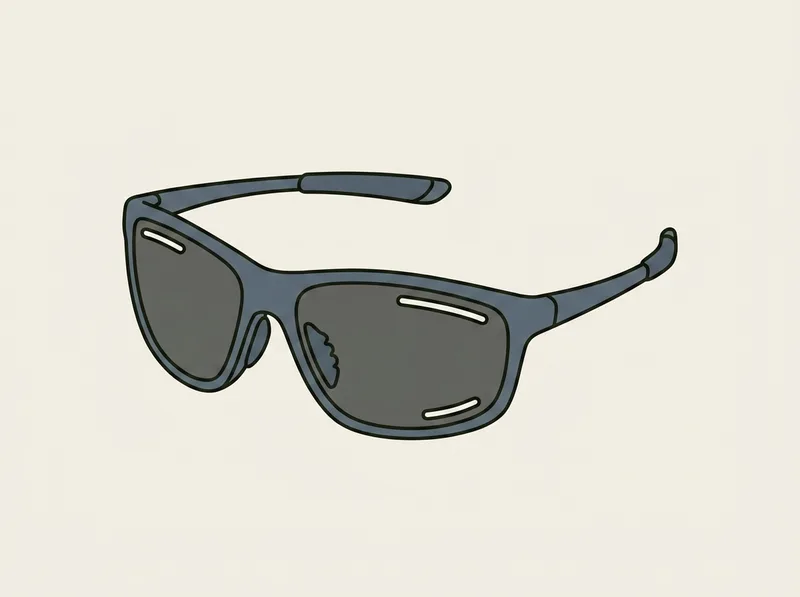
The Tifosi Rivet has the two features that matter and none of the ones that do not. Tifosi's Enliven Golf lens is a colour-enhancing tint aimed at the same problem Prizm Golf addresses, and the lens is vented, which is the only genuinely effective answer to fogging when you walk uphill on a humid morning.
Tifosi run a British site rather than leaving UK buyers on the American one, publish the Clarion Fototec version at £79.99 there, and back the frame with a lifetime warranty against manufacturer defects, which is an unusual thing to offer at that level.
 £79.99 at Tifosi's UK store
Tifosi Rivet
- Lens
- Enliven Golf, with Fototec and Clarion Mirror options
- Polarised
- Not published on the Enliven Golf lens
- Interchangeable
- Yes on the Interchange version
- Fit
- Vented lens, adjustable nose and ear pieces
- Warranty
- Lifetime against manufacturer defects
- Price
- Published at £79.99 for the Clarion Fototec on Tifosi's UK site
- A dedicated golf tint at a price where losing a pair is annoying rather than expensive.
- Vented lenses, which is the only real answer to fogging on a humid morning.
- A lifetime warranty against manufacturer defects, published on the listing.
- The frame feels its price in the hand, and the hinges are the part that gives up.
- The interchangeable lens option is a separate version rather than a feature of every pair.
- Tifosi do not publish whether the golf lens is polarised, which is the one thing worth knowing.
VerdictThe sensible buy for anyone who has never worn sunglasses to play and does not know whether they will keep them on. It does the tint job for around half the Oakley and nothing about it is embarrassing.
You feel the price in the frame rather than the lens. The hinges are the part that eventually complains, and interchangeable lenses are a separate version of the product rather than something every pair does. Tifosi also decline to state whether the golf lens is polarised, which is the one specification a buyer most needs.
goodr Sonic G: cheap and it stays put
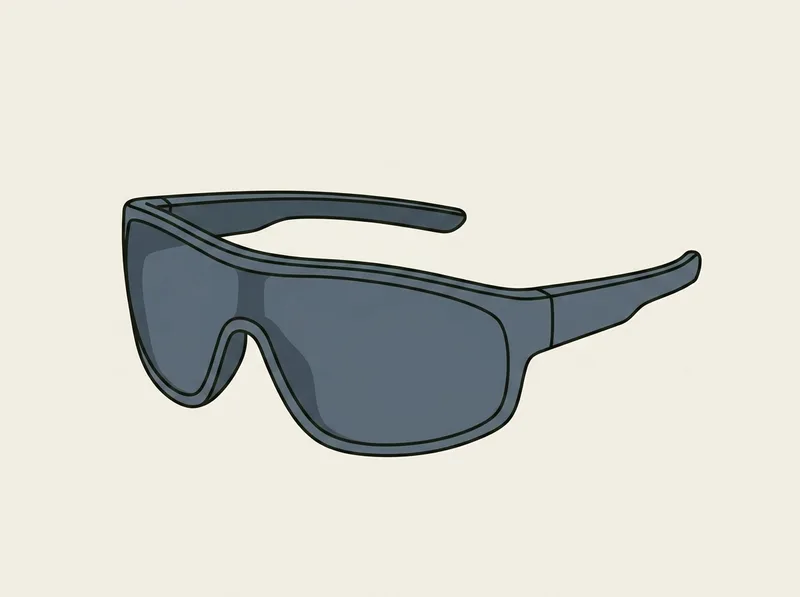
goodr built a business on the observation that most people lose or sit on sunglasses, and priced accordingly. The Sonic G is a wrap shield with a grip coating on the arms and bridge, and the grip is not a marketing line: it is most of the reason these appeared on golf courses at all.
goodr publish polarised lenses across their range, which some golfers want specifically and some golfers should think about first. There is no golf-tuned tint, so contrast on a green is whatever the colourway happens to deliver.
 £40 at goodr's UK store
goodr Sonic G
- Lens
- Tinted with a mirror or gradient finish depending on colour
- Polarised
- goodr publish polarised lenses across the range
- Interchangeable
- No
- Fit
- Wrap shield with a grip coating on the arms and bridge
- Range
- Several frame shapes across the golf collection
- Warranty
- Standard consumer warranty, no lifetime term published
- Cheap enough that sitting on a pair is a shrug rather than an incident.
- The grip coating genuinely works, which is most of why these turned up on golf courses at all.
- Polarised as standard, which some golfers specifically want for glare off water.
- No golf-specific tint, so contrast on a green is whatever the colourway happens to give you.
- Polarisation is not a free upgrade on a golf course, for reasons set out below.
- Fixed lenses, so one pair covers one light condition.
VerdictThe right buy for a golfer whose real problem is that sunglasses fall off, not that they see the greens badly. It solves that for the price of a dozen decent balls and nothing else here does.
Lens tint, and what it is actually doing
A tint is a filter. A neutral grey lens takes brightness out evenly and leaves everything looking like a slightly darker version of itself, which is comfortable and tells you nothing. A tinted lens takes more of some wavelengths than others, which changes the relationship between colours rather than the overall brightness.
On a golf course, almost everything you need to judge is one colour. The fairway, the fringe, the first cut, the collar and the green are shades of the same green, and the difference between them is what tells you how a chip will run and where a putt starts to be a putt.
| Tint family | What it does | Where it suits |
|---|---|---|
| Neutral grey | Reduces brightness evenly, keeps colour true | Very bright days, no help with contrast |
| Brown or amber | Warms the image and lifts contrast between greens | The general golf answer, most conditions |
| Rose or copper | Strong contrast lift, everything looks warmer than it is | Flat overcast light, reading subtle slope |
| Green or emerald | Mild contrast lift, less colour shift than rose | Golfers who dislike a warm image |
| Yellow or high contrast clear | Brightens a dull scene, almost no sun reduction | Dusk, heavy overcast, early winter rounds |
The tints marketed for golf sit in the brown to rose range for this reason. That is also why golf-specific lenses look wrong in a shop mirror and right on a course: the warm cast that seems strange indoors is the thing doing the work outside.
Polarisation, and the argument nobody has properly
Polarised lenses cut glare by blocking light waves oriented in one plane, which is why they work so well on water and wet tarmac. Sunglasses marketing treats polarisation as a straight upgrade, and for driving and fishing it very nearly is.
On a golf course it is a trade, and the trade lands in the worst possible place.
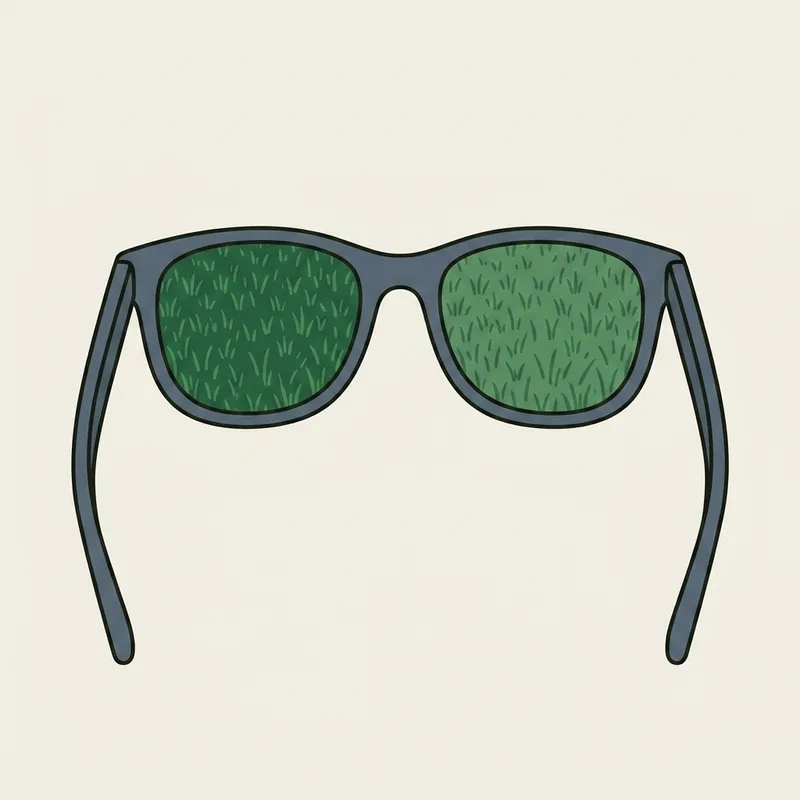
Grass reflects light. The pattern of those reflections across a green is part of how you see slope, grain and the subtle change in sheen where a surface tilts away from you. A polarised lens removes exactly those reflections. It makes the green look flatter, calmer and cleaner, and flatter is not what you want when the whole task is spotting that the surface is not flat.
There is a second, smaller complication. Polarised lenses interact with screens, so a phone or a laser rangefinder display can go dark or striped at certain head angles. If you use a device on most shots, that is worth a thirty second test before you buy. Which device you carry is its own decision, and rangefinders and GPS watches fail this test differently, since a watch face and a laser eyepiece are not the same kind of screen.
The practical position: if you play mostly in bright conditions and struggle with glare, polarised is fine and the greens cost is small. If you already find greens hard to read, take the glasses off on the green or buy non-polarised. Nothing about reading a green gets easier with less visual information.
Fit, under a cap, through a turn
Golf is the only sport where sunglasses are worn under a peak, looked through at a steep downward angle, and then subjected to a fast rotation. Most sport eyewear is designed for one of those and not the other two.
Three things decide whether a pair survives it.
Frame depth against the peak. A tall frame pushed up by a cap peak sits lower on the nose, which puts the top edge across your sightline at address. Try the two together or accept that you will be pushing them up all day.
Grip when damp. Rubber pads that hold when dry and slip when wet are the standard failure. Materials that get tackier with moisture, which is what Oakley's Unobtainium and goodr's coating both claim, are the difference between a pair you wear and a pair in the side pocket.
Lens depth against the cheek. Look down at address wearing a deep wrap lens and it will touch, and once it touches it fogs. This is the single most common reason a pair that felt perfect in a shop gets abandoned.
Impact and what a lens is made of
Sport lenses are made from polycarbonate or a proprietary equivalent, which is what separates them from fashion eyewear. It is impact resistant rather than shatter-prone, which matters in a game where a mishit off a mat or a range divider is not rare.
Two things are worth knowing when comparing. Brands describe impact performance in different words, and unless a maker cites a specific standard by name on the listing, the description is a claim rather than a certification. And a mirror coating is a surface finish, not a structural feature: it reduces the light reaching the lens and adds nothing to strength.
If you wear prescription glasses, the choice is between prescription sport frames, which several of these makers offer, and clip-on or fit-over options, which are cheaper and always worse in the wind. Contact lenses are the answer most golfers land on, with the caveat that a dry, windy afternoon is exactly when they misbehave.
Where sunglasses sit in the kit list
Eyewear is a small purchase that quietly does more than the price suggests, because squinting for four hours is a tension problem as well as a comfort one. It belongs with the rest of the sun kit rather than on its own: a cap with a real peak does most of the same job for less money, and golf hats covers what to look for there. An umbrella is the third piece, and a golf umbrella is bought as often for sun as for rain by anyone who plays in July.
Dress codes almost never mention eyewear, but they do govern the rest of it, and what to wear golfing covers what clubs actually still enforce.
What to spend
| Budget | What it buys | Who it suits |
|---|---|---|
| £30 to £45 | A grip coating, a general tint, one fixed lens | Anyone testing whether they will keep them on |
| £55 to £85 | A dedicated golf tint, vented lenses, adjustable fit | Playing regularly in bright conditions |
| £120 to £180 | An engineered golf tint or a fitted frame with swappable lenses | Playing weekly, or one of the two problems solved properly |
The step that buys the most is the first one. Going from no sunglasses to a cheap dedicated golf tint changes what you see on a green. Going from that to a hundred and seventy pound pair mostly buys frame quality, fit adjustment and the ability to change tint, all of which are real and none of which are the same size of change.
One last piece of practical advice that costs nothing. Keep them on a retainer cord or in a hard case in the bag, not loose in a pocket with tees. Nearly every pair that gets thrown away died of scratches rather than of anything the maker could have prevented, and a lens with a scratch across the middle is worse than no lens at all. Which pocket that lives in comes down to how you have set the bag up, and what to carry in a golf bag is worth a look if yours is currently a bin.
Key takeaways
- Tint is the specification that changes what you can see. A golf tint separates fairway, fringe and rough by contrast rather than dimming everything equally.
- The Oakley Flak 2.0 XL with Prizm Golf is the pick for a golfer who plays in bright light and wants the lens engineered for the surface.
- The SunGod Vulcans solve fit rather than tint, publish a 34 gram weight, convert between a full and a top frame, and carry a lifetime guarantee.
- The Tifosi Rivet gets a dedicated golf tint and vented lenses for around half the Oakley's price.
- Polarisation is a trade, not an upgrade. It removes the surface reflections that carry information about slope and grain on a green.
- Polarised lenses also interfere with some screens, so test yours against a rangefinder or a phone before buying.
- Fit under a cap decides whether you keep them on. Check frame depth against the peak and lens depth against your cheek at address.
- Buy for the green rather than for ball tracking. Tracking a drive against a bright sky is hard through any lens.
Common questions
What are the best sunglasses for golf?
For most golfers the Oakley Flak 2.0 XL with the Prizm Golf tint, because that lens is engineered to separate the shades of green a course is made of. If sunglasses slide or fog on you, the SunGod Vulcans fix that better and are guaranteed for life. The Tifosi Rivet gets you a dedicated golf tint for a fraction of the money.
Are polarised sunglasses good for golf?
They are a trade. Polarisation cuts glare well, and it does it by removing surface reflections, which are part of how you read slope and grain on a green. If glare is your problem, polarised is fine. If reading greens is your problem, take them off to putt or buy non-polarised.
What lens colour is best for golf?
Brown, amber, rose and copper tints all lift contrast between shades of green, which is the judgement a golf course asks you to make. Neutral grey is comfortable and unhelpful. Yellow and high contrast clear lenses suit dull light rather than bright sun.
Can sunglasses actually help you read greens?
A contrast-lifting tint makes the transitions between mowing heights and the subtle sheen changes on a surface easier to see, which is genuine help. It does not tell you what the putt does. Reading a green is still a skill, and no lens substitutes for looking at the ground from more than one angle.
Why do my sunglasses fog up on the golf course?
Because a lens sitting close to a warm face with no airflow will always fog eventually, and walking uphill in humidity guarantees it. Vented lenses are the only structural fix. Pushing the glasses further from your face with a different nose pad size helps, and anti-fog sprays help temporarily.
Do golf sunglasses need to be polarised to protect your eyes?
No. UV protection and polarisation are unrelated. Polarisation controls glare, and UV filtering is a separate property of the lens material or coating. A non-polarised lens can offer full UV protection, and a cheap polarised lens does not automatically offer any.
Will sunglasses help me track my ball in the air?
Less than people hope. Following a ball against a bright sky is mostly about the lens being dark enough, which is why golfers who buy on that test end up in a neutral tint that does nothing for the greens. Accept that a drive into the sun is hard to follow and buy for the ground instead.
How do I stop sunglasses slipping when I sweat?
Look for nose pads and arm tips made from a material that grips harder when damp rather than one that gets slick. Frames with adjustable pads let you tighten the fit rather than relying on the shape being right. A retainer cord solves the problem inelegantly and completely.
Do sunglasses interfere with a golf rangefinder?
Polarised ones can. Some laser rangefinder displays and most phone screens dim or stripe when viewed through a polarised lens at certain angles. It is a thirty second test in a shop and worth doing if you use a device on most shots.
Are expensive golf sunglasses worth it?
The step from nothing to a cheap dedicated golf tint changes what you see. The step from there to a premium pair buys frame quality, adjustable fit and interchangeable lenses, which are real but smaller improvements. A well fitting cheap pair you actually wear beats an expensive pair in the bag.
Should I wear sunglasses when putting?
If the tint is a golf tint and the lens is not polarised, there is no reason to take them off. If they are polarised, or if they sit low enough that the frame crosses your sightline over the ball, take them off. Consistency matters more than either: switching between glasses and no glasses mid-round changes what a green looks like halfway through.
How we put this together
- Published manufacturer specifications for each pair, taken from the maker's own listing rather than a retailer's summary.
- Whether the maker states that the golf tint is polarised or not, because that is the specification with the most direct effect on reading a green.
- Whether lenses can be swapped, since a single tint has to cover an eight o'clock tee time and a two o'clock one.
- How the frame is shaped around a cap peak and a full turn, which decides whether the pair stays on your face or in your bag.
- The Rules position on eyewear that measures distance, which is the one place sunglasses and the Rules of Golf touch.
On this page
- The four, compared
- Oakley Flak 2.0 XL: the tint built for grass
- SunGod Vulcans: the pair that stays on
- Tifosi Rivet: the golf tint at a sensible price
- goodr Sonic G: cheap and it stays put
- Lens tint, and what it is actually doing
- Polarisation, and the argument nobody has properly
- Fit, under a cap, through a turn
- Impact and what a lens is made of
- Where sunglasses sit in the kit list
- What to spend
- How we put this together
Tom Ashworth
Tom Ashworth is a PGA Professional who has taught golf since 2012, working mainly with beginners and mid-handicappers at club level in Surrey. He reviews the instruction guides on Learn Golf for technical accuracy before they publish.
Most of his teaching is with players in their first three years of the game, and most arrive having been told too much: six swing thoughts collected from videos, half of them contradicting each other. His approach is to check the grip and the alignment before touching the swing, on the basis that most bad ball flight is decided at address.