7 Best Used Golf Club Sets for Beginners: Second Hand Picks
A second hand set is the one place in golf where £400 buys £1,200 of clubs. The catch is that the used market sells to people who cannot yet tell a bargain from a liability, and this list is ranked with that in mind.
Some links here earn us a commission at no extra cost to you. It never changes what we recommend or the order we rank it. How this works.
A £400 second hand set buys clubs that sold for £1,000 or more new. The same £400 on a new boxed set buys the cheapest heads, shafts and grips a factory can assemble, arranged around a nice bag. That arithmetic is the entire case for buying used, and these seven set routes are ranked on how safely a UK beginner can act on it.
The seven, compared
Four of the seven buy a whole set at once and three assemble one. That split matters more than any brand name, because the real trade in second hand golf is not price against quality but price against protection: who checked the clubs, and what happens if they arrive wrong.
| Pick | Best for | What you get | Price band | Checks before sale | Returns | Price |
|---|---|---|---|---|---|---|
| Next2New Build a Bag | A full used set chosen for you, graded, with real returns | A full custom set, driver to putter, built from graded used stock | £400 to £900 for most builds | Every club graded and authenticated | 60 days: refund to day 14, credit to day 60 | Around £400 to £900, set by your budget |
| A Graded Second Hand Full Set | A ready made full set with the checking already done | A ready made full set with bag, boxed or assembled from branded stock | £300 to £550 for most, starter sets from about £75 | Graded and authenticated by the specialist | 60 day specialist returns window | Around £300 to £550 for most sets |
| A Used Iron Set to Build Around | The clubs that matter most bought first, the rest added used | Six or seven matched irons; driver, putter and bag added separately | £150 to £450 for the irons alone | Graded specialist stock, or your own checks privately | Retailer window if bought graded, none privately | Around £150 to £450 for the irons alone |
| Callaway Strata (Used) | The most common boxed set, cheap and everywhere second hand | 12 to 18 pieces boxed, including bag and headcovers | £100 to £250 depending on piece count and age | None privately, so inspect before paying | None from a private seller | Around £100 to £250 second hand |
| Wilson Prostaff SGI (Used) | The UK club shop package set, a season old at half price | 10 or 11 clubs plus a stand bag | £150 to £250 second hand | None privately, so inspect before paying | Seller dependent, usually none | Around £150 to £250 second hand |
| Inesis 100 Half Set (Used) | The cheapest respectable start in golf | 6 clubs plus bag: driver, hybrid, 7 iron, 9 iron, sand wedge, putter | £50 to £100 second hand | None privately, so inspect before paying | None from a private seller | Around £50 to £100 second hand |
| A Self Assembled Used Half Set | The most original quality per pound, for the patient buyer | 7 or 8 clubs you choose, plus a used bag | £150 to £300 depending on patience | Only the checks you do yourself | Varies by source, usually none | Around £150 to £300 all in |
The rankings weight protection at the top and price towards the bottom, because a beginner cannot yet spot a refinished driver face or a tired shaft at arm's length. The further down the list a route sits, the more of the checking moves onto the buyer.
Why a used set beats a new boxed set at the same money
The strongest new complete sets cluster between about £250 and £450, honestly built for that price, which means every component is the cheapest version of itself. The same money second hand buys clubs designed, engineered and priced at two or three times that a few years earlier: better faces, better shafts, real loft options.
Depreciation runs in the beginner's favour too. Value falls fastest in a club's first two or three years while function barely moves, because model cycles are annual and the change per cycle is small. The routes into used clubs trade price against protection in predictable steps, and the seven picks below walk down them in order.
Those numbers describe what a beginner's set is for: making constant mishits survivable rather than adding yards to a grooved swing. Forgiveness and build quality do that, newness does not, and the used market sells the first two at a discount precisely because it cannot sell the third.
Next2New Build a Bag: a full used set built to your budget
The hard part of buying a second hand set is not supply, it is knowledge: which irons, what flex, what gaps. Next2New Golf's Build a Bag service moves that problem onto somebody who solves it daily. A short form covers height, handicap, 7 iron distance, brands and budget, and back comes a video over WhatsApp walking through a proposed set built from graded used stock, from £400.
Two details separate this from simply being sold to. Every club is graded on a published condition scale running from Brand New down to Poor, and authenticated before it is listed, so the specification in the video is the specification in the box. Returns run 60 days, a full refund to day 14 and store credit to day 60, which turns a wrong guess about flex into a swap rather than a loss. Delivery is free within the UK at set prices, and the service covers the UK and Ireland.
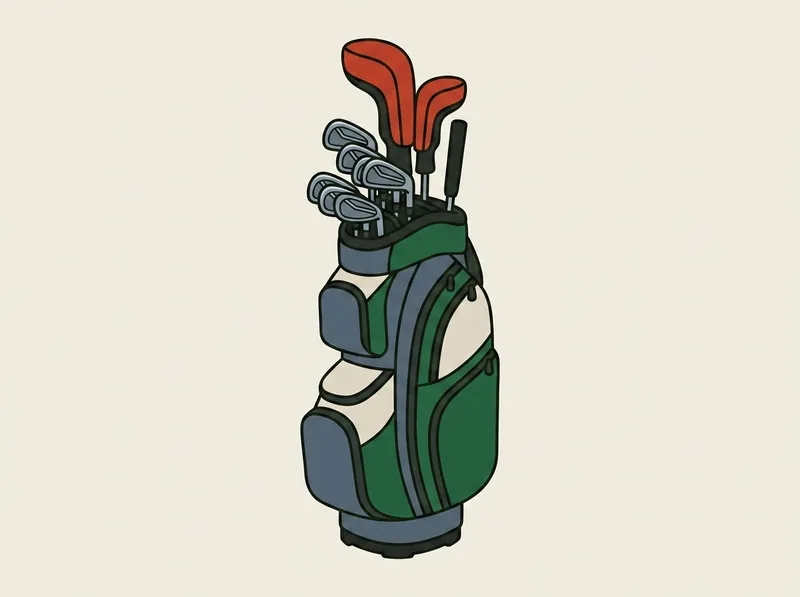 Around £400 to £900, set by your budget
Next2New Build a Bag
- What you get
- A full custom set, driver to putter, built from graded used stock
- Price band
- £400 to £900 for most builds
- Checks before sale
- Every club graded and authenticated
- Returns
- 60 days: refund to day 14, credit to day 60
- The set is chosen against your height, budget and current distances, which removes the guesswork that sinks most first set purchases.
- Every club is graded on a published condition scale from Brand New down to Poor and authenticated before sale, so the specification in the video is the specification in the box.
- 60 day returns, with a full refund to day 14, turn a wrong flex or length into a swap rather than a sunk cost.
- From £400 it costs more than a marketplace set, because grading, authentication and returns are built into the price.
- The consultation is a video call rather than a fitting bay, so nothing gets hit before it arrives.
- Builds depend on what is in stock, so an unusual spec, very tall or left handed, can take longer to put together.
VerdictThe strongest route because it solves the actual problem, which is not finding used clubs but knowing which used clubs fit. A beginner who wants clubs in hand this weekend, or who has less than £400, is better served further down this list.
The caveat is the obvious one: nothing gets hit before it arrives. The consultation is a video, not a fitting bay, and a beginner who wants to feel a club before paying, or has less than £400, is better served further down this page.
A graded second hand full set: one decision, one parcel
For a beginner who wants a complete bag without a consultation, the simplest route is a ready made set from a specialist that grades and authenticates its stock. The second hand full sets in this kind of inventory run from starter sets around £75 to full builds at £900, with most beginner appropriate sets landing between £300 and £550.
The value is in what happened before the listing went up: somebody checked the shafts match, the lofts make a sensible ladder and the clubs are genuine, then priced the set against its condition. That work costs perhaps 15 to 25% over the same clubs bought privately, and it comes with a returns window no private sale offers.
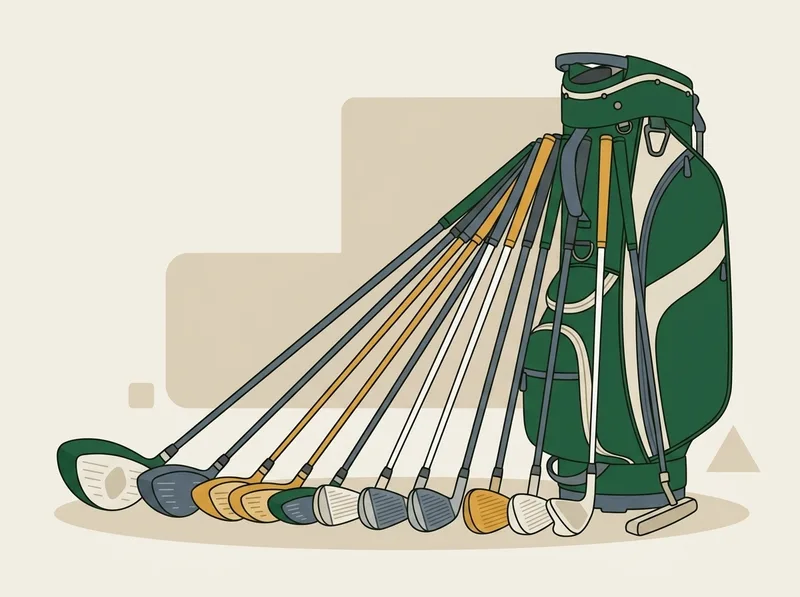 Around £300 to £550 for most sets
A Graded Second Hand Full Set
- What you get
- A ready made full set with bag, boxed or assembled from branded stock
- Price band
- £300 to £550 for most, starter sets from about £75
- Checks before sale
- Graded and authenticated by the specialist
- Returns
- 60 day specialist returns window
- The checking, grading and distance gapping are already done, so what arrives is a coherent set rather than a job lot.
- Stock runs from starter sets under £100 to branded builds around £900, so one route covers almost any budget.
- A genuine returns window means a set that turns out wrong goes back, which no private listing offers.
- The set comes as built, so there is no swapping the putter or adding a hybrid before it ships.
- Costs 15 to 25% more than the same clubs would privately, which is the price of the grading and the returns.
- The best value sets sell fast, so the exact set seen one week is often gone the next.
VerdictThe pick for a beginner who wants one decision and one parcel. Anyone with strong preferences about individual clubs, or a budget under about £300, gets more from building around an iron set or buying a boxed set privately.
The constraint is that the set arrives as built, so a beginner who already knows they want a mallet putter or an extra hybrid is fitting themselves to the set rather than the reverse.
A used iron set to build around: strongest clubs first
Irons take most of the strikes in a round and punish mishits hardest, so they are the one place a matched, forgiving set genuinely matters. Buying second hand iron sets from graded specialist stock puts the first £150 to £450 where it works hardest: game improvement sets from the major brands sit in that band used, at roughly half their new price. Choosing which used irons to build around is the biggest decision in this route, and the rest follows from it.
Around that core the rest assembles cheaply: a used putter, a high lofted wood and a second hand stand bag together cost less than the irons did, added as the budget allows.
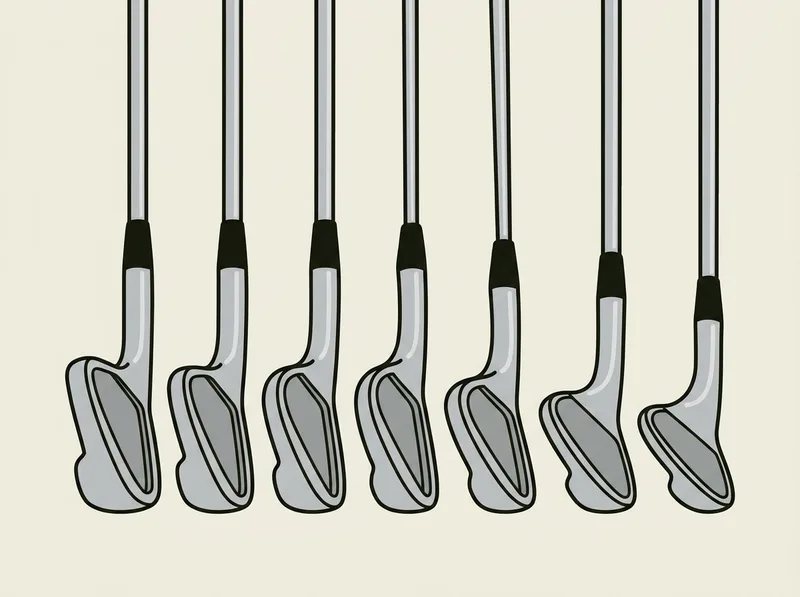 Around £150 to £450 for the irons alone
A Used Iron Set to Build Around
- What you get
- Six or seven matched irons; driver, putter and bag added separately
- Price band
- £150 to £450 for the irons alone
- Checks before sale
- Graded specialist stock, or your own checks privately
- Returns
- Retailer window if bought graded, none privately
- Irons are where a matched, forgiving set matters most, so the money goes where the strikes are.
- Game improvement iron sets from the major brands sit around £150 to £450 used, roughly half their new price.
- The rest of the bag can be added used for less than the irons cost, one club at a time as the game grows.
- It is three or four buying decisions rather than one, which is exactly what some beginners want to avoid.
- Distance gaps between the irons and whatever woods join them are yours to get right.
- No bag, no putter and no driver in the headline price, so the total is always more than it first appears.
VerdictThe best route for a beginner happy to assemble a bag over a month rather than an afternoon. Anyone who wants to walk onto a course this weekend with a full set should take one of the ready made options above.
The trade is decisions for money: three or four purchases and some attention to distance gaps, in exchange for a bag where every club earned its place.
Callaway Strata, used: the boxed set everyone sells on
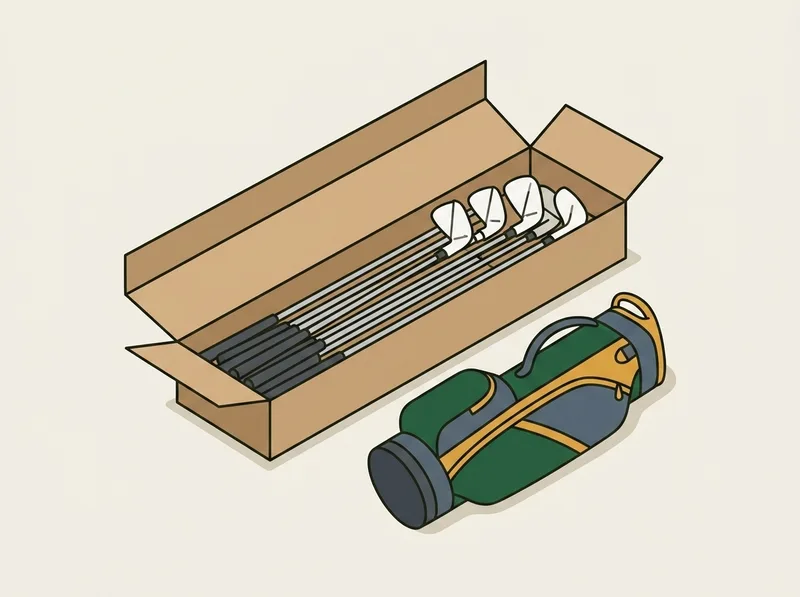
The Strata is the default beginner package set worldwide, which makes it the most listed second hand one. Lightly played examples from people who tried golf and stopped sell for £100 to £250 depending on piece count and age. Marketplace listings sit at the cheap end of the places that sell used clubs because no grading or returns are built into the price, and the Strata is that trade in set form.
The recipe is right for a first set: lightweight graphite woods, wide soled cavity back irons, a usable putter and a stand bag. In the UK it sells mainly through marketplaces rather than golf shops, so buying one usually means a private sale, inspected by you or not at all.
 Around £100 to £250 second hand
Callaway Strata (Used)
- What you get
- 12 to 18 pieces boxed, including bag and headcovers
- Price band
- £100 to £250 depending on piece count and age
- Checks before sale
- None privately, so inspect before paying
- Returns
- None from a private seller
- The used market is full of barely played examples, because it is the set people buy before finding out whether golf sticks.
- Lightweight graphite woods and wide soled cavity back irons, which is the right recipe for a first season.
- Sold in 12, 14, 16 and 18 piece versions, so there is genuine choice over how much set to buy.
- Sold mainly through marketplaces in the UK rather than golf shops, so buying one usually means a private sale with no returns.
- The shafts and grips are built to a price, and a heavily used example can feel dead in the hands.
- Several generations look near identical in photographs, so a listing can be a ten year old set at a two year old price.
VerdictThe default used boxed set for a reason: complete, forgiving and usually around £150. It suits a beginner who wants everything at once and accepts private sale risk; anyone who wants recourse if the set arrives wrong should pay the specialist premium.
The generation problem deserves respect. Strata sets have looked broadly similar for a decade, and photographs rarely show the difference between a two year old set and a ten year old one. Ask for the purchase date, and treat a seller who does not know as pricing information.
Wilson Prostaff SGI, used: the club shop staple at half price
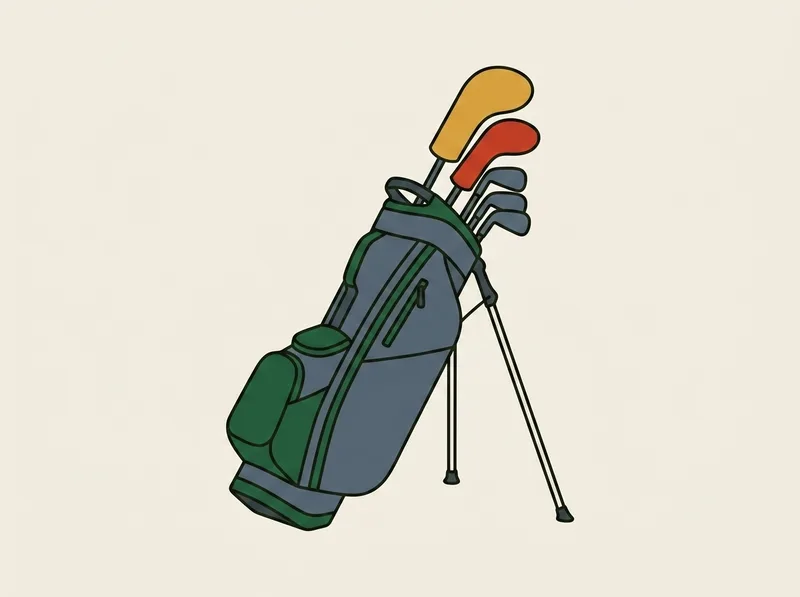
Where the Strata dominates marketplaces, the Prostaff SGI is the package set UK golf shops actually sold, so local listings are full of them and comparison is easy. New it retails between about £300 and £500; a season old example typically asks £150 to £250 and does the same job.
SGI stands for super game improvement, and for once the label describes the buyer accurately. Every head is built for height and mishit tolerance, and the 10 club make-up leaves room to add clubs later rather than paying up front for ones a beginner cannot use.
 Around £150 to £250 second hand
Wilson Prostaff SGI (Used)
- What you get
- 10 or 11 clubs plus a stand bag
- Price band
- £150 to £250 second hand
- Checks before sale
- None privately, so inspect before paying
- Returns
- Seller dependent, usually none
- Super game improvement heads across the whole set, which is Wilson's honest label for exactly what a new golfer needs.
- Sold new through UK golf shops for years, so used examples are plentiful, local and easy to compare.
- A 10 club set leaves four free slots to add a hybrid or wedge later without touching the 14 club limit.
- One stock shaft and flex per version, so a very fast or very slow swing is poorly served.
- The stand bag wears first, and a tired one drags down the feel of the whole set.
- Common enough that overpriced listings sit right next to bargains, which punishes anyone who does not compare.
VerdictThe set to watch local listings for, because UK supply is deep and a one season old example does the same job as new for half the money. A beginner far from average height or swing speed should build around an iron set instead.
The limitation is uniformity. One shaft, one flex and one length per version means the set fits the middle of the population well and the edges badly, and no amount of discount fixes a club that is wrong for the body swinging it.
Inesis 100 half set, used: the cheapest respectable start
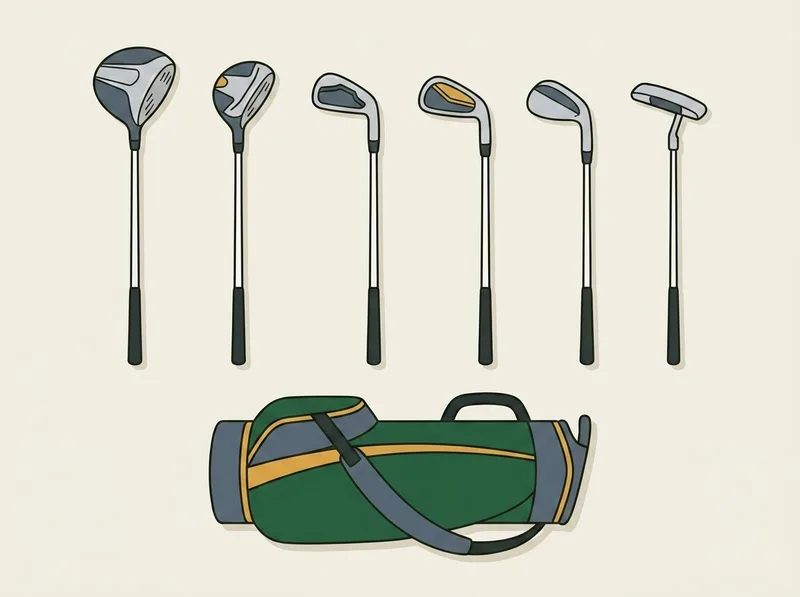
Decathlon's Inesis 100 half set is six clubs and a bag: driver, hybrid, 7 iron, 9 iron, sand wedge and putter. It is cheap new, which sets a hard ceiling on what a used one should cost. At £50 to £100 second hand it is the least expensive way into golf that does not involve clubs old enough to vote.
The six club make-up is a feature at this stage, not a compromise. Wide gaps make distance differences visible to a player still learning what each club does, and nothing in the bag is beyond a beginner.
 Around £50 to £100 second hand
Inesis 100 Half Set (Used)
- What you get
- 6 clubs plus bag: driver, hybrid, 7 iron, 9 iron, sand wedge, putter
- Price band
- £50 to £100 second hand
- Checks before sale
- None privately, so inspect before paying
- Returns
- None from a private seller
- Decathlon's scale means used examples are everywhere, cheap and often barely played.
- Six clubs is a deliberate teaching set: wide gaps to learn distances with, and nothing redundant.
- Modern high launch shapes throughout, unlike the older no name sets selling for the same money.
- The wide iron gaps start to grate once striking improves, and most players outgrow the set within two seasons.
- One shaft spec per set, with no length or flex options at all.
- Cheap new means very cheap used has to be the deal: much above £100 the saving over a new one disappears.
VerdictThe right first set for anyone unsure golf will stick, because the total risk is a couple of green fees. A beginner who already knows they are committed should start a rung up, on equipment that will not need replacing inside two seasons.
The set is a stepping stone by design: once strikes become consistent the wide gaps start to cost shots, and most owners move on within two seasons, which is also why used examples are so easy to find.
A self assembled used half set: the most quality per pound
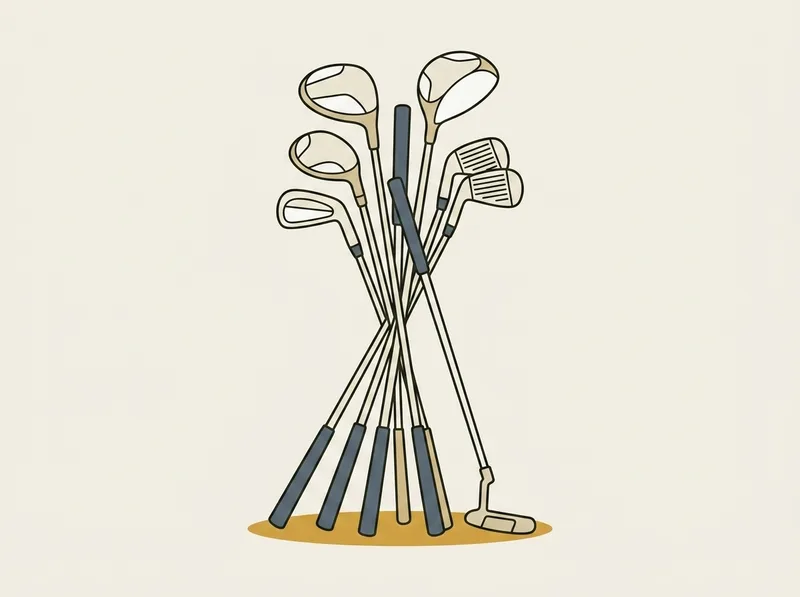
The last route is the cheapest way to own genuinely good clubs: a 7 or 8 club half set built from individual used listings. Single clubs sell for much less than the same clubs inside a set, so £150 to £300 assembles former £700 equipment. A three year old used driver from a major brand often costs less than the woods section of a new package set and outperforms it comfortably.
The recipe that works: four or five matched mid irons from one model, a forgiving driver or high lofted wood, a sand wedge and any putter that suits the eye. Mixed brands across those groups cost nothing in performance.
 Around £150 to £300 all in
A Self Assembled Used Half Set
- What you get
- 7 or 8 clubs you choose, plus a used bag
- Price band
- £150 to £300 depending on patience
- Checks before sale
- Only the checks you do yourself
- Returns
- Varies by source, usually none
- Pound for pound the highest original quality on this page, because single used clubs sell for less than sets do.
- Every club gets chosen for loft, length and flex rather than accepted as packaged.
- Clubs bought well individually resell individually, so the set holds its value unusually well.
- Takes weeks of watching listings rather than one purchase, plus the discipline to skip near misses.
- Distance gapping is entirely on you, and a badly gapped half set plays worse than a cheap boxed one.
- Every purchase is a separate chance to buy a dud, mostly without returns.
VerdictThe best value in used golf for a beginner who enjoys the hunt and knows what to check. For everyone else, the assembly work is precisely what the graded routes at the top of this list charge to take away.
What this route prices is patience: each club is a separate search, inspection and chance to buy badly, mostly without returns. Done well it embarrasses everything else here for value; done impatiently it produces an expensive drawer of mistakes.
What a second hand beginner set should contain
The R&A's Rule 4.1b caps a bag at 14 clubs, and a beginner needs nowhere near it. Working out what clubs a beginner needs points to eight or nine with wide, honest gaps: a high lofted driver or 3 wood, one hybrid, four or five irons from around the 6 iron down, a sand wedge and a putter. The same rule allows adding clubs up to the limit, more usefully mid season than mid round.
What matters more than the count is what is missing. Long irons, a 9 degree driver and a lob wedge are the clubs most often stuffed into cheap full sets and least often hittable by their buyer.
What used sets cost against new
Bands come from live UK listings and retail prices checked in September 2026. Private sales sit at the bottom of each second hand band, graded specialist stock at the top, and the gap between the columns is the money this page is about.
| Set route | Second hand | The same thing new |
|---|---|---|
| Half set, 6 to 8 clubs | £50 to £300 | £110 to £400 |
| Boxed beginner package set | £100 to £250 | £250 to £450 |
| Matched game improvement iron set | £150 to £450 | £550 to £1,100 |
| Ready made branded full set | £300 to £550 | £700 to £1,400 |
| Custom built full set from graded stock | £400 to £900 | £1,200 to £2,500 |
Used clubs also come with a floor under them. A set bought at these prices goes back to the used club market a season later for most of what it cost, which no new boxed set manages once the film is off the driver. For a beginner unsure golf will stick, that floor is worth as much as the discount.
How to check a second hand set before you pay
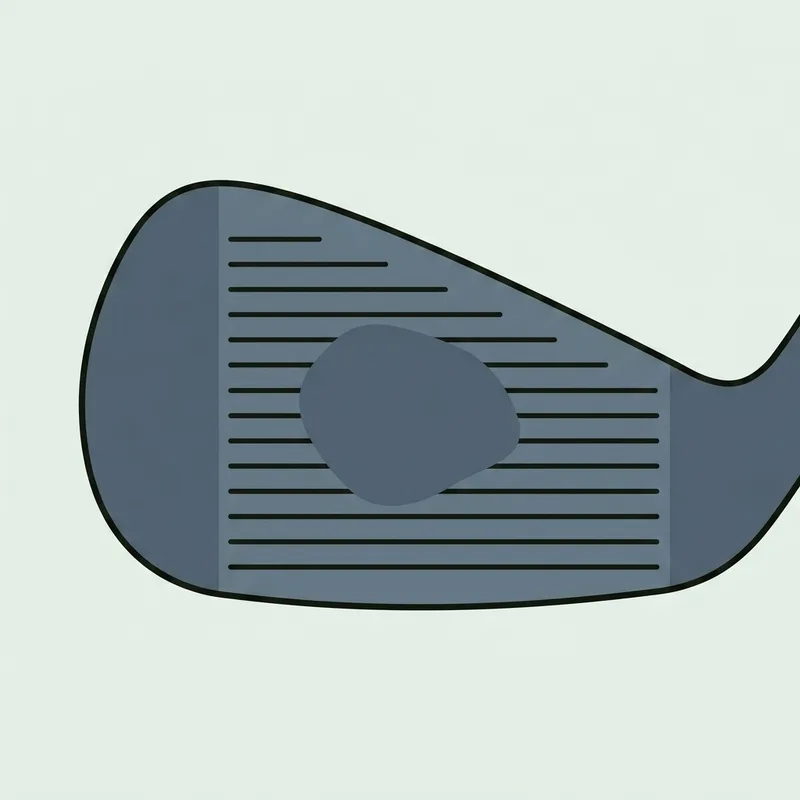
Four checks cover most of what goes wrong, and the full inspection, checking a used club one surface at a time, takes about two minutes per club with nothing but hands and daylight. Grips come first because they are the cheap fix: cracked or glazed rubber costs a few pounds per club to replace, so worn grips are a negotiating point rather than a reason to walk away.
Shafts are the opposite, because a damaged shaft kills the club. Steel wants checking for rust, dents and any kink visible when sighting down its length; graphite for splinters and patches where bag rub has cut the outer layer. On irons, read where the grooves fade: wear concentrated in a small centre patch means the face is ageing, wear sprayed across the whole face means plenty left.
On the driver, press the face gently and shake the club next to an ear. A face that flexes with a click, or a rattle inside the head, is damage no discount repays. One club failing is a haggling point; the driver or half the irons failing is a different set.
Mixed set or boxed: how much matching matters
Matching matters inside the irons and almost nowhere else. Irons from one model share a loft ladder, a shaft family and a consistent length step, which is what makes their distances predictable. Beyond them, no manufacturer logic connects a driver to a putter, and nobody's bag matches at the top level of the game either.
That is why the assembled routes here rank so well on value. A mixed bag built from one matched iron set plus individually chosen woods and putter gives up nothing in function, and buys each club at single club prices. What a boxed set buys instead is time and safety: one purchase, one parcel and gapping that somebody else already thought about.
When not to buy second hand
The used case weakens where the new price is already low. An Inesis half set sells new for so little that a used one must be very cheap before the saving covers the missing returns and unknown history. The cheaper a set is new, the deeper the used discount needs to be.
It also weakens at the edges of the size range. Used stock is overwhelmingly standard length, standard lie and regular flex, so a golfer well over 6 foot 2, well under 5 foot 4, or left handed is searching a fraction of the market. Left handed beginners especially often do better buying new, because the used supply is thin enough to make patience expensive. And an uninspected private sale with no returns is only a fair trade at a price low enough to absorb a dud.
Length and flex: sizing a second hand set
Standard sizing fits more people than the fitting industry suggests, which suits used buyers, because standard is what the second hand market stocks. TrackMan's club speed benchmarks put the average male amateur, playing off 14.5, at 94 mph with the driver, and beginners generally sit below that, which points at regular flex, light shafts and plenty of loft. Shot Scope's driving distance distribution, from over 200 million tracked shots, has nearly 70% of amateurs averaging under 250 yards off the tee, so tour spec shafts in a listing are a reason to keep scrolling, not a bargain.
The vanity trap runs the other way. Stiff flex sounds like a compliment and plays like a punishment for anyone without the speed to load it, tending to leave the face open and the ball short and right. When a listing's flex is unknown, assume it matches the original buyer, probably an average male amateur, and read the wear pattern for confirmation.
Key takeaways
- The Build a Bag route is the strongest option: a full custom used set from £400, graded, authenticated and covered by 60 day returns.
- At the same money, second hand buys roughly three model tiers more club: £350 used buys former £900 equipment, £350 new buys the cheapest of everything.
- Ready made graded full sets run £300 to £550; marketplace boxed sets like the Strata and Prostaff SGI run £100 to £250 with no returns.
- Eight or nine clubs is a full beginner set. The extras in a 14 piece bargain are the ones a beginner cannot hit.
- Check four things before paying: grips, which are a cheap fix, then shafts, iron grooves and the driver face, which are not.
- Standard length and regular flex suit most beginners, and stiff shafts in a used listing are a warning rather than an upgrade.
- Very tall, very short or left handed golfers face a thin used market, and are the buyers for whom new most often makes sense.
Common questions
Are used golf club sets worth it for beginners?
Yes, more than for any other group. A beginner's set gets outgrown within a couple of seasons whatever it cost, so the used discount is money saved on equipment that was always temporary. Second hand also buys far better original build quality at the same price, which matters most to the player who mishits most.
What is the best second hand golf club set for a beginner?
The strongest option is a custom built used set through the Build a Bag service ranked first here, from £400: graded, authenticated, matched to your height and budget, with 60 day returns. On less money, a used Callaway Strata or Wilson Prostaff SGI at £100 to £250 covers a first season well.
How much should I pay for a second hand set of golf clubs?
£100 to £250 buys a solid boxed package set privately. £300 to £550 buys a graded, authenticated full set from a specialist with returns. Below £100, half sets are the honest option, and above £550 the buyer is usually a committed golfer rather than a beginner.
Is it better to buy a cheap new set or a good used set?
A good used set, in almost every case. A £350 new boxed set is built from the cheapest possible components; £350 used buys clubs sold at two or three times that a few years ago. The exception is the very bottom of the market, where a used set saves too little over new to cover the risk.
What should a used golf club set include?
Eight or nine clubs: a high lofted driver or 3 wood, a hybrid, irons from about the 6 iron down, a sand wedge and a putter. A bag with legs matters more than a fourteenth club. Long irons and low lofted drivers add nothing for a beginner except weight.
How old is too old for a second hand golf set?
About ten years for woods and drivers, where head design has genuinely moved, and fifteen or more for irons and putters, which age far more slowly. Condition beats age either way: a well kept twelve year old iron set outplays an abused five year old one.
What should I check before buying second hand golf clubs?
Grips for cracking and glazing, a cheap fix and a fair negotiating point. Shafts for rust, dents, kinks or graphite wear, which are dealbreakers. Iron faces for grooves worn smooth at the centre, and the driver for face flex or a rattle inside the head. Two minutes per club covers it.
Can I mix different brands in one golf set?
Yes, everywhere except inside the irons, which should come from one model so lofts and lengths step consistently. The driver, woods, wedges and putter can come from anywhere. Mixed bags built this way are how most experienced golfers actually play, and second hand they cost far less than boxed sets suggest.
Do used golf clubs perform worse than new ones?
Not meaningfully, until wear reaches the working surfaces. A five year old head with healthy grooves and an undamaged face performs within a whisker of its original spec. The exceptions are worn grooves, dead grips and damaged shafts, all visible in a proper check.
Where should a beginner buy second hand golf clubs?
From a specialist that grades and authenticates its stock if protection matters most, since returns and condition scales remove the worst outcomes. From marketplaces and local listings if price matters most and the set can be inspected first. The worst combination is a private sale, unseen, at a price that assumed nothing was wrong.
How we put this together
- Live stock and asking prices across UK marketplaces and specialist second hand retailers, checked September 2026 and recorded as bands rather than points.
- What each route includes, measured against the R&A's 14 club limit and the eight or nine clubs a beginner actually uses.
- Shot Scope's published performance averages for 25 handicap golfers, which define what a beginner's set has to survive.
- TrackMan's published club speed benchmarks, which set the shaft weight and flex a second hand set should carry.
- Grading scales, authentication and returns windows as published by the retailers concerned.
On this page
- The seven, compared
- Why a used set beats a new boxed set at the same money
- Next2New Build a Bag: a full used set built to your budget
- A graded second hand full set: one decision, one parcel
- A used iron set to build around: strongest clubs first
- Callaway Strata, used: the boxed set everyone sells on
- Wilson Prostaff SGI, used: the club shop staple at half price
- Inesis 100 half set, used: the cheapest respectable start
- A self assembled used half set: the most quality per pound
- What a second hand beginner set should contain
- What used sets cost against new
- How to check a second hand set before you pay
- Mixed set or boxed: how much matching matters
- When not to buy second hand
- Length and flex: sizing a second hand set
- How we put this together
Tom Ashworth
Tom Ashworth is a PGA Professional who has taught golf since 2012, working mainly with beginners and mid-handicappers at club level in Surrey. He reviews the instruction guides on Learn Golf for technical accuracy before they publish.
Most of his teaching is with players in their first three years of the game, and most arrive having been told too much: six swing thoughts collected from videos, half of them contradicting each other. His approach is to check the grip and the alignment before touching the swing, on the basis that most bad ball flight is decided at address.