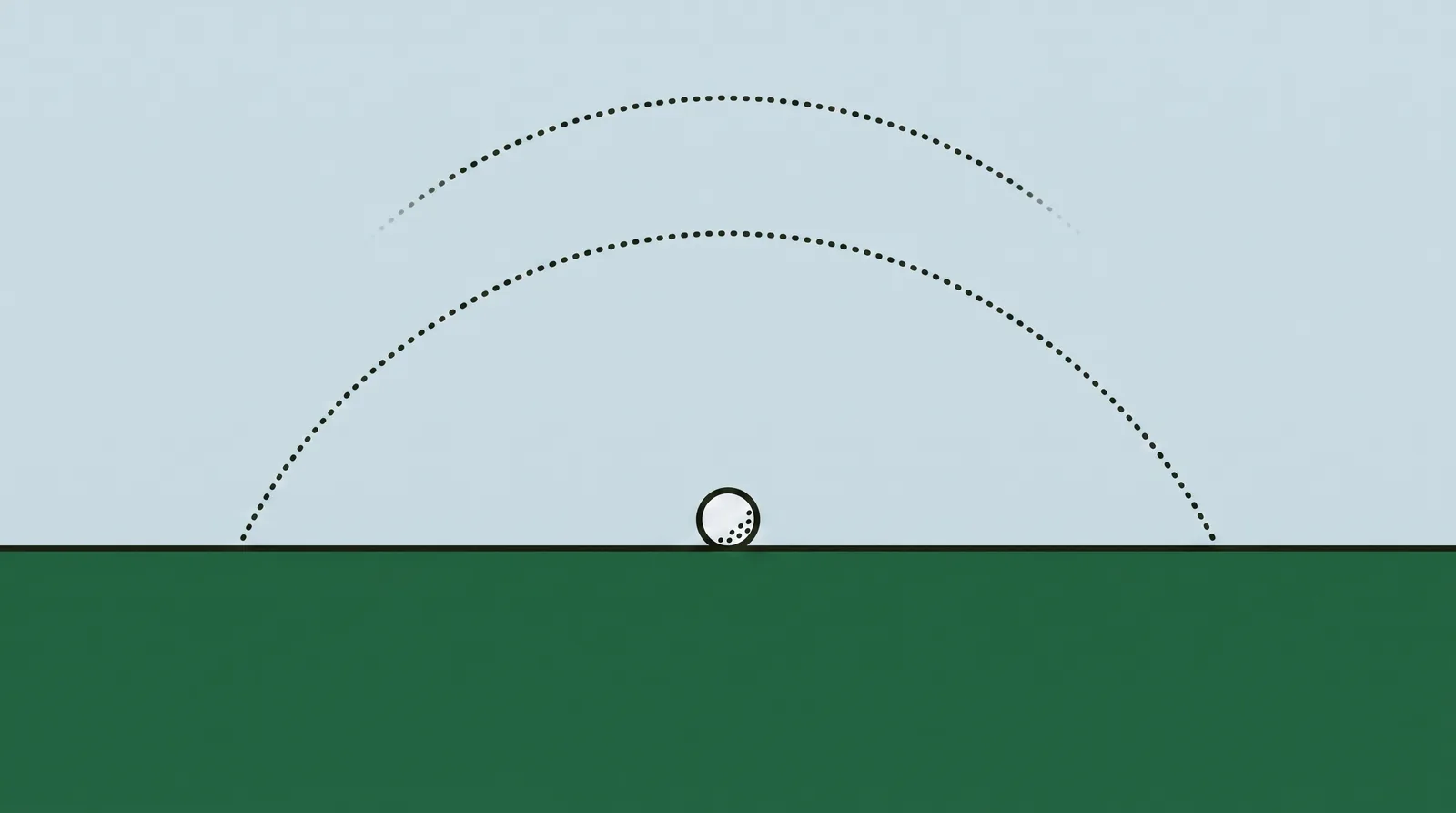
The club goes through, the ball stays exactly where it was, and everybody behind you saw it. A whiff feels like proof you cannot play golf, and it is nothing of the sort. It is a low point problem with a specific cause, and it is one of the few faults in golf that can genuinely be fixed inside a single session.
What a whiff actually is
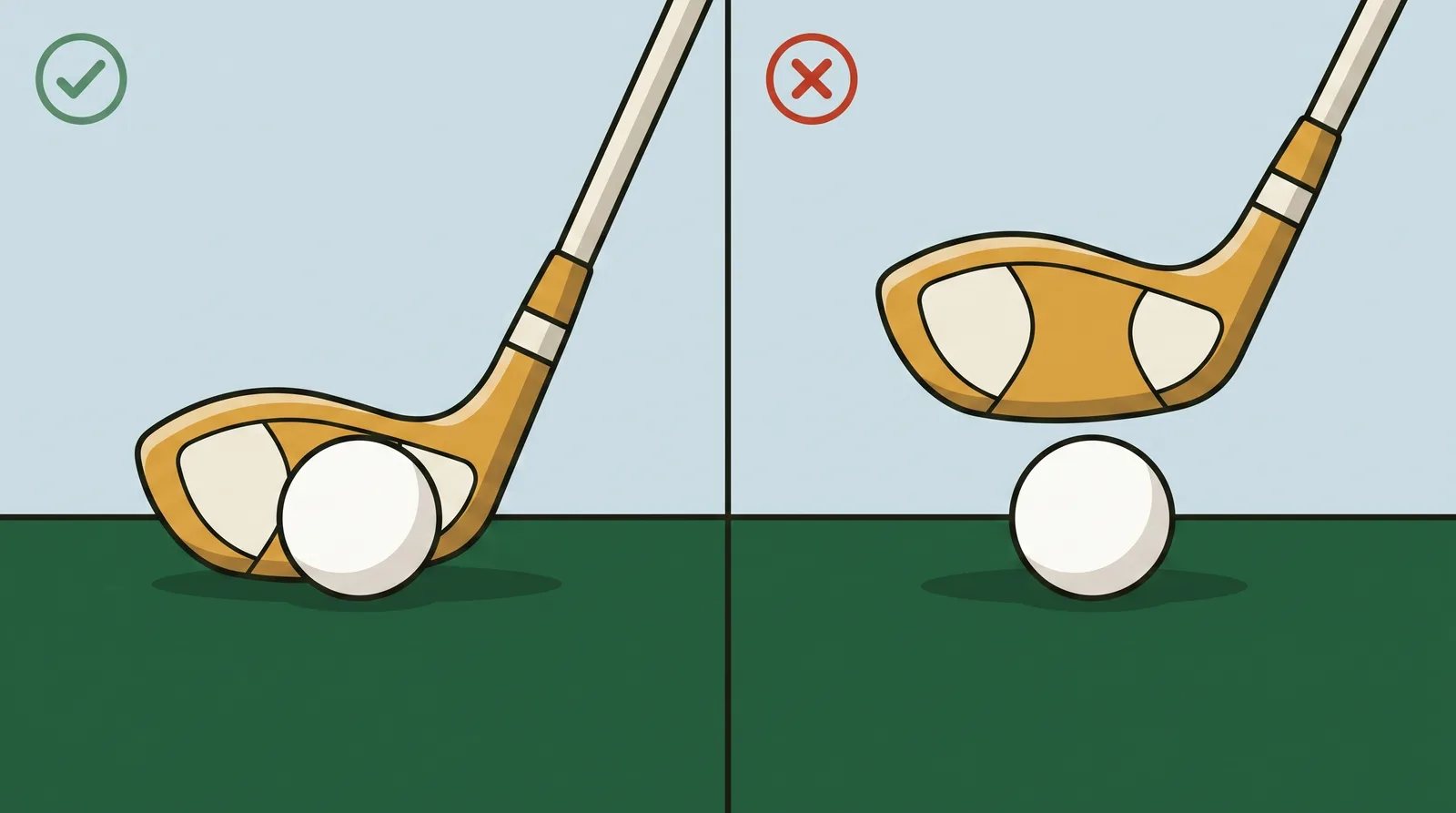
The club travels on an arc. If that arc bottoms out above the level of the ball, the club passes over it. If it bottoms out well behind the ball, the club hits the ground first and either stops or bounces over the top.
Those are the only two ways to miss the ball completely, and the first is far more common.
The reason the arc rises is almost always that you rose with it. Any straightening of the legs or lifting of the upper body during the downswing raises the whole swing arc by exactly the amount you stood up, and it does not take much. Two inches of height gain is more than enough to miss a ball that is 1.68 inches across.
Cause one: standing up through the downswing
The technical name is early extension or loss of posture. You set a spine angle at address, and somewhere in the downswing your hips push forward and your torso straightens.
It comes from three places:
Trying to lift the ball. The dominant cause in beginners. The body rises because the golfer is unconsciously trying to scoop the ball upward.
Tension. Gripping hard and bracing the whole body shortens everything and pulls you up out of your posture. This is why whiffs cluster on the first tee and in front of an audience.
Swinging too hard. Maximum effort recruits the whole body, and the body's easiest way to add speed is to stand up and pull.
The fix for all three is the same: maintain the height you set at address until well after the ball has gone. Our golf posture guide covers the address position this depends on.
Cause two: the low point is behind the ball
Less common but it happens, particularly off a tee. The club bottoms out several inches behind the ball, catches the turf, and either stops dead or skips over the top of the ball without touching it.
This is the same mechanism as a fat shot, taken to its extreme. Weight hanging on the trail foot and hands behind the ball drop the low point backward. From a teed ball, where there is no turf to slow the club, it produces a complete miss instead of a heavy shot.
If your whiffs happen off the ground rather than off a tee and you also hit a lot of heavy shots, how to stop hitting fat shots is the more targeted guide.
The fixes, in order
Why it happens on the first tee specifically
Whiffs are not evenly distributed. They cluster on the opening shot of a round, in front of a group waiting, and on the shot after a bad one.
That is not coincidence. Tension is the mechanism, and all three of those situations produce it. A tense golfer grips harder, braces the legs, shortens the backswing and rushes the transition, and every one of those makes standing up more likely.
The practical answer is a routine that does not change under pressure, plus a deliberate club choice. There is no rule requiring a driver on the first tee, and a 5 iron off the first is a completely legitimate way to start a round with a ball in play. The routine side is covered in first tee nerves.
Does a whiff count as a stroke?
Yes, if you meant to hit the ball. Under Rule 14 of the Rules of Golf a stroke is the forward movement of the club made to strike the ball, so a genuine attempt that misses counts and you play your next shot from where the ball lies.
The exception is if you stopped or altered the swing deliberately before the clubhead reached the ball, in which case no stroke was made. A practice swing that accidentally moves the ball is a different situation again.
Nobody in your group will enforce this against a beginner, and plenty of casual games ignore it entirely. It is worth knowing so you are not surprised in a competition, and the wider basics are in golf rules for beginners.
Key takeaways
- A whiff means the low point of your swing was above the ball or well behind it.
- The usual cause is standing up through the downswing, which raises the whole swing arc.
- Two inches of height gain is enough to miss a ball that is under an inch and three quarters tall.
- The instinct to lift the ball is what raises your body. The loft on the club does that job.
- Look at one specific spot on the ball, not at the ball in general. It stabilises your head height.
- Swing at 70% until you have ten clean contacts in a row. Speed is not what makes the ball travel.
- Whiffs cluster on the first tee because tension causes them. Change the club, not the effort.
Common questions
Why do I keep missing the golf ball completely?
The lowest point of your swing is passing above the ball, almost always because you are standing up out of your posture during the downswing. That usually comes from trying to lift the ball into the air, from tension, or from swinging too hard.
Does a whiff count as a stroke in golf?
Yes, if you were making a genuine attempt to hit the ball. Under the Rules of Golf a stroke is the forward movement of the club made to strike the ball, so a swing and a miss counts and you play the next shot from where the ball lies.
How do I stop whiffing the golf ball?
Pick one specific spot on the ball and keep your eyes on it through impact, swing at about 70% effort, and maintain the height you set at address until well after the ball has gone. Most beginners see it disappear within one session using those three together.
Why do I whiff on the first tee?
Tension. A nervous golfer grips harder, braces the legs and rushes the transition, and all three make standing up through the downswing more likely. Use the same routine you use everywhere else and take a club you trust rather than a driver.
Should I tee the ball higher to stop whiffing?
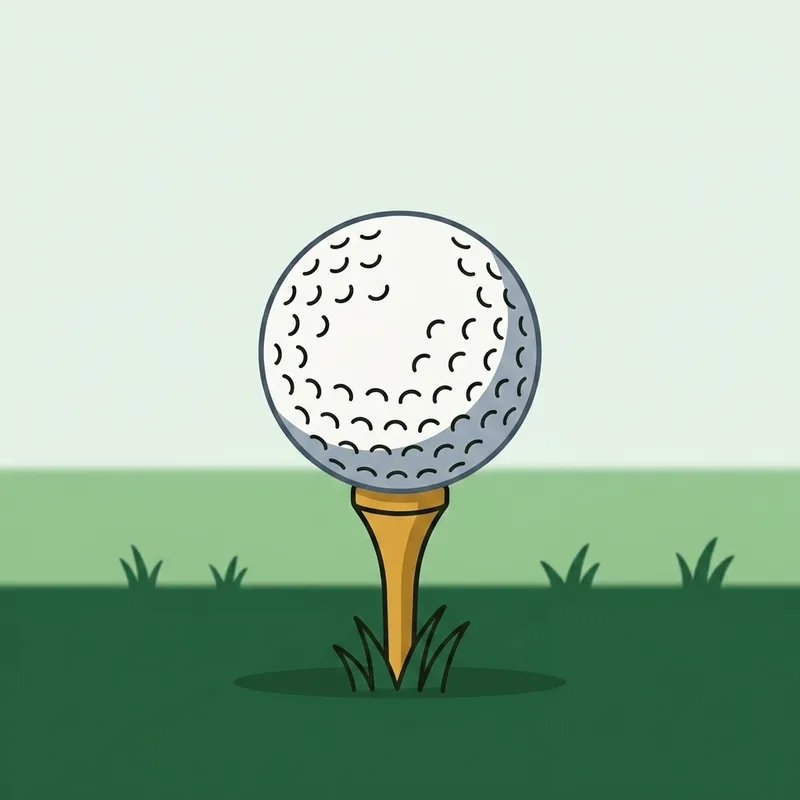
While you are learning, yes. Teeing it high enough that a miss is nearly impossible, then lowering it gradually over a week, builds contact in stages. It is a temporary scaffold rather than a technique, and there is no downside to using it in your first few rounds.
Is whiffing a sign I should give up golf?
No, and it is far more common than anyone admits, because nobody talks about it. It is a mechanical fault with a specific cause and it responds faster than almost any other fault in golf. Most golfers who whiff regularly stop within a few weeks of practice.
Why do I whiff with my driver but not my irons?
The driver is the longest club with the flattest swing, which makes the low point harder to control, and it is usually the club golfers swing hardest with. Extra effort recruits the whole body and the body's easiest way to add speed is to stand up. Swing the driver at the same effort as your 7 iron.
Can the wrong clubs cause whiffing?
They contribute. Clubs too long or too heavy for you are genuinely harder to control through impact, and many beginners play hand-me-downs that do not fit at all. It is worth checking length before assuming the fault is entirely yours.
What is early extension in the golf swing?
Standing up and pushing the hips toward the ball during the downswing, losing the spine angle you set at address. It raises the swing arc, and depending on how much you lose you get thin shots, topped shots or a complete miss.
Should I keep my head down to stop whiffing?
Keep your eyes on a specific spot rather than forcing your head down, which is a subtly different instruction. A rigidly buried head restricts the turn and creates its own problems. Looking at one dimple achieves the height stability you want without the tension.
Tom Ashworth
Tom Ashworth is a PGA Professional who has taught golf since 2012, working mainly with beginners and mid-handicappers at club level in Surrey. He reviews the instruction guides on Learn Golf for technical accuracy before they publish.
Most of his teaching is with players in their first three years of the game, and most arrive having been told too much: six swing thoughts collected from videos, half of them contradicting each other. His approach is to check the grip and the alignment before touching the swing, on the basis that most bad ball flight is decided at address.